Journal · May 2026
Upholstery for home offices, remote workers and streamers.
A practical guide to recovering an office chair, choosing foam for a sit-all-day setup, and picking fabric that survives the spilt coffee and the cat. Written by a workshop that's been recovering chairs since 1978.
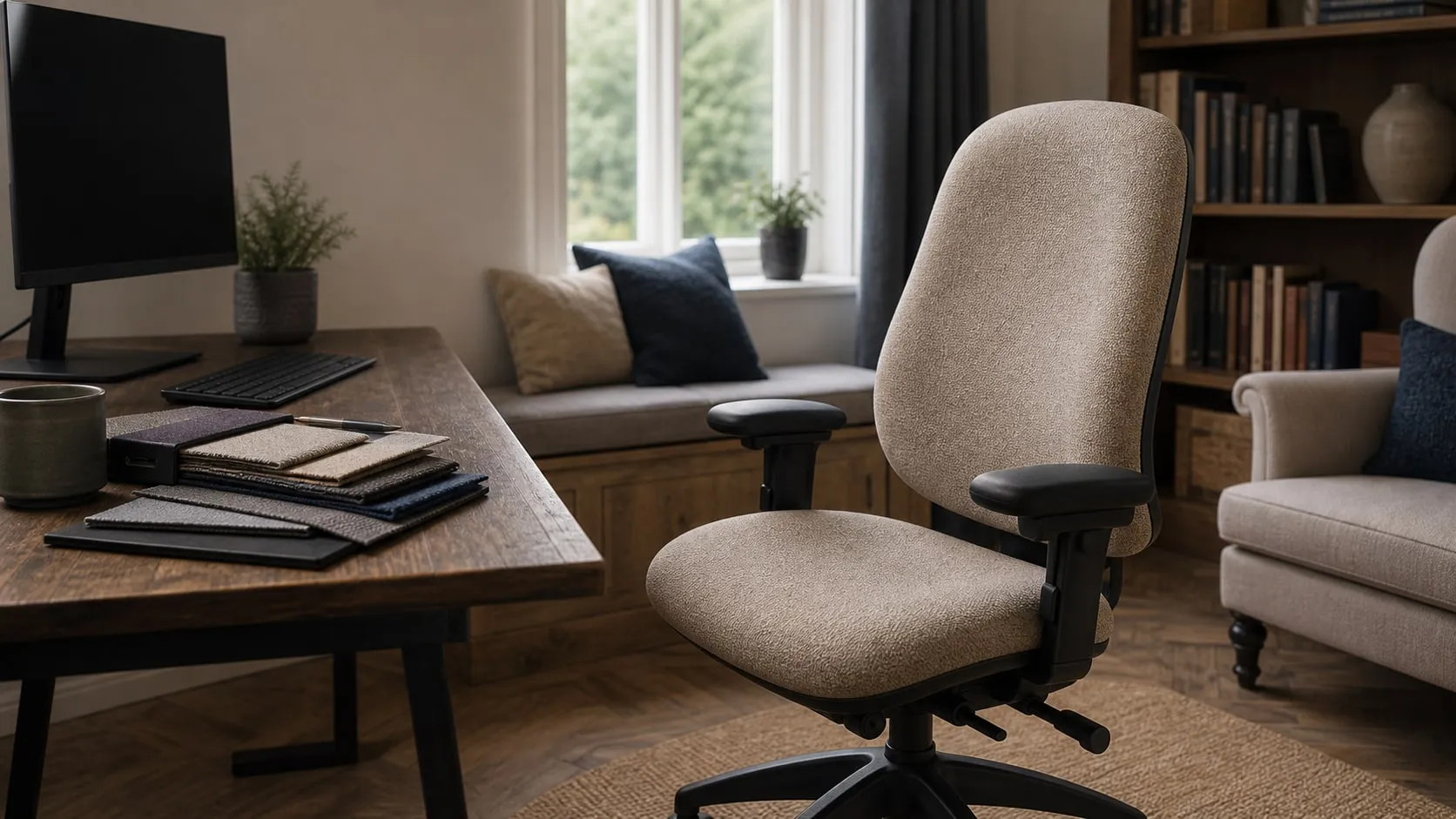
Why home offices wreck chairs faster than offices do
An office chair on a corporate task at 9-to-5 typically sees 1,500 hours of seated use in a year. The same chair at a home office, used by someone who eats lunch at the desk, takes calls in the evening and streams or works weekends, can hit 3,000+. Add in the absence of a Friday cleaner, a higher snack-to-workday ratio, and a pet that's worked out the chair is the warmest seat in the house.
The wear shows up in three places. The seat pad foam compresses unevenly, usually slumping to one side. The back-rest fabric pills and stretches where shoulder blades and head meet. And the mesh or fabric on the arms gets shiny in the spot you rest your elbows.
Recover or replace?
For any chair you've spent more than about £200 on new (Herman Miller, Steelcase, Humanscale, even higher-end Aeron clones) recovering plus a foam refresh costs about a third of replacement and gives you the chair you'd already trained your back into. We do this work routinely. Send a photo of the chair, the wear pattern, and (if you have it) the model name; we'll usually quote the same day.
For chairs from the supermarket-furniture end of the market (the £50–£120 home-office bracket) recovering rarely makes economic sense. The frames flex, the gas struts give out, and the new cover ends up on a chair that won't last another year. We'll tell you straight if that's what we see.
Foam: what to ask for
- HR40 high-resilience. The workshop default. Soft enough to feel like a chair, supportive enough to last. Suits 80% of home-office seat pads.
- HR50. Firmer feel, longer-lasting under heavy daily use. Worth it if you're at the desk 8+ hours and weigh north of 95kg.
- Reflex. Cheaper, firmer, less bounce. Fine for back-rests; not ideal for seat pads where you want to settle in.
- Memory foam (visco-elastic). Popular online, less popular in our workshop. It heats up under the body and the slow-recovery feel doesn't suit a chair you're constantly shifting position in. We use it in mattress toppers, not office cushions.
Fabric: pick for the actual day
The right fabric for a home office is the one that survives Tuesday morning. That usually means:
- Wipe-clean weaves (Agua, Crest faux-leathers). Look like fabric, behave like vinyl. Coffee, grease, kid hands, dog fur: wipe and move on. Our top recommendation for streamer setups, kitchen-table-as-desk, and anyone with kids or pets.
- Heavy commercial weaves (Crib 5). Designed for hotel and restaurant seating, so they handle daily use without pilling. Comfortable enough on a chair you're sitting in for hours. Good middle ground if you want fabric feel but workhorse durability.
- Wool blends. Premium feel, traditional look. Beautiful on a wing chair next to the desk, less practical on the chair itself unless you treat it.
- Velvet. Looks great on camera, feels great to sit in, but holds onto pet hair and shows worn patches faster. Choose with eyes open.
The streamer-specific brief
If the chair will be on camera in a livestream or on a podcast set, the rules shift slightly. Solid neutral colours hold up under variable streaming light and don't moiré on cheaper webcams. Avoid tight contrasting patterns (small-scale houndstooth, fine pinstripes). They shimmer in compressed video. Velvet and matte weaves both photograph well; satins and high-shine fabrics throw hot spots under ring lighting.
We've recovered chairs for a handful of production sets on the same brief, so the materials we'd recommend for a streamer chair are largely the same as for a TV set: matte-finish wool blends or commercial weaves, mid-tone neutrals (charcoal, oat, deep navy), and a back-rest that doesn't pile up at the shoulders.
What it costs
Indicative ranges for the most common home-office jobs:
- Recover seat pad & back panel on a task chair: £85–£110 plus fabric and VAT (typically 1–2m).
- Recover plus new HR40 foam for a tired seat: £150–£200 plus fabric and VAT.
- Wing chair / accent armchair next to the desk: £350–£700 plus fabric and VAT (4–6m).
- Bespoke acoustic panel or behind-desk wall covering: from £180/m².
Those are guides, not quotes. Fabric is on top because the metreage and price varies enormously. We'll calculate the metreage for you and confirm the price before you buy anything.
Sustainability: the numbers behind "recover not replace"
A new task chair has roughly 15–25 kg of CO₂e in its embodied footprint, mostly from steel, plastic and shipping. Recovering with new fabric and foam is a fraction of that, typically 3–5 kg CO₂e, and keeps the existing frame, plastics and packaging out of landfill. For a small business swapping out a row of chairs every few years (see our office and contract upholstery), that's the difference between a skip and a workshop bench.
How to start
Send a photo, tell us the model if you know it, and how you use the chair. We'll come back the same day with an indicative price and a likely finish date. For Greater Manchester we collect for a charge confirmed in your quote; from further afield, bring it to the workshop.
Unsure how it will look?
Send photos, rough sizes and the style or fabric you have in mind. We will send a free quote with example looks so you can decide with confidence, no obligation.